제어
제어 2 - 피드백 제어의 표준 PID의 원리
PID 제어의 핵심 원리를 쉽게 이해하세요.
권민재
PID 제어란?
PID는 목표값과 현재값의 오차 e(t) 로 제어 입력을 만드는, 가장 널리 쓰이는 피드백 제어기입니다.
P 제어 (비례제어)
목표값에 대한 오차에 비례하여 출력 값을 계산하는 방식
P제어의 문제
Kp를 키우면 응답이 빨라지고 정상상태 오차가 줄어든다. 단, 너무 키우면 진동하고 결국 불안정해지게 됩니다.
플랜트에 적분 작용이 없으면(type-0), 중력·마찰 같은 외란을 버티려 오차가 0이 아닌 값에서 균형을 잡게됩니다.
즉 목표값에 '거의' 도달하지만 끝까지 못 붙는다고 볼 수 있습니다.
예시로 히터를 들 수 있습니다. 히터는 계속 일정한 입력을 주면 일정한 출력이 나옵니다.플랜트 자체에 적분기가 있으면(type-1) P만으로도 스텝 입력 offset이 0이 됩니다.
모터에 전압을 주면 각도가 계속 쌓이면서 올라가는것을 예시로 들 수 있습니다.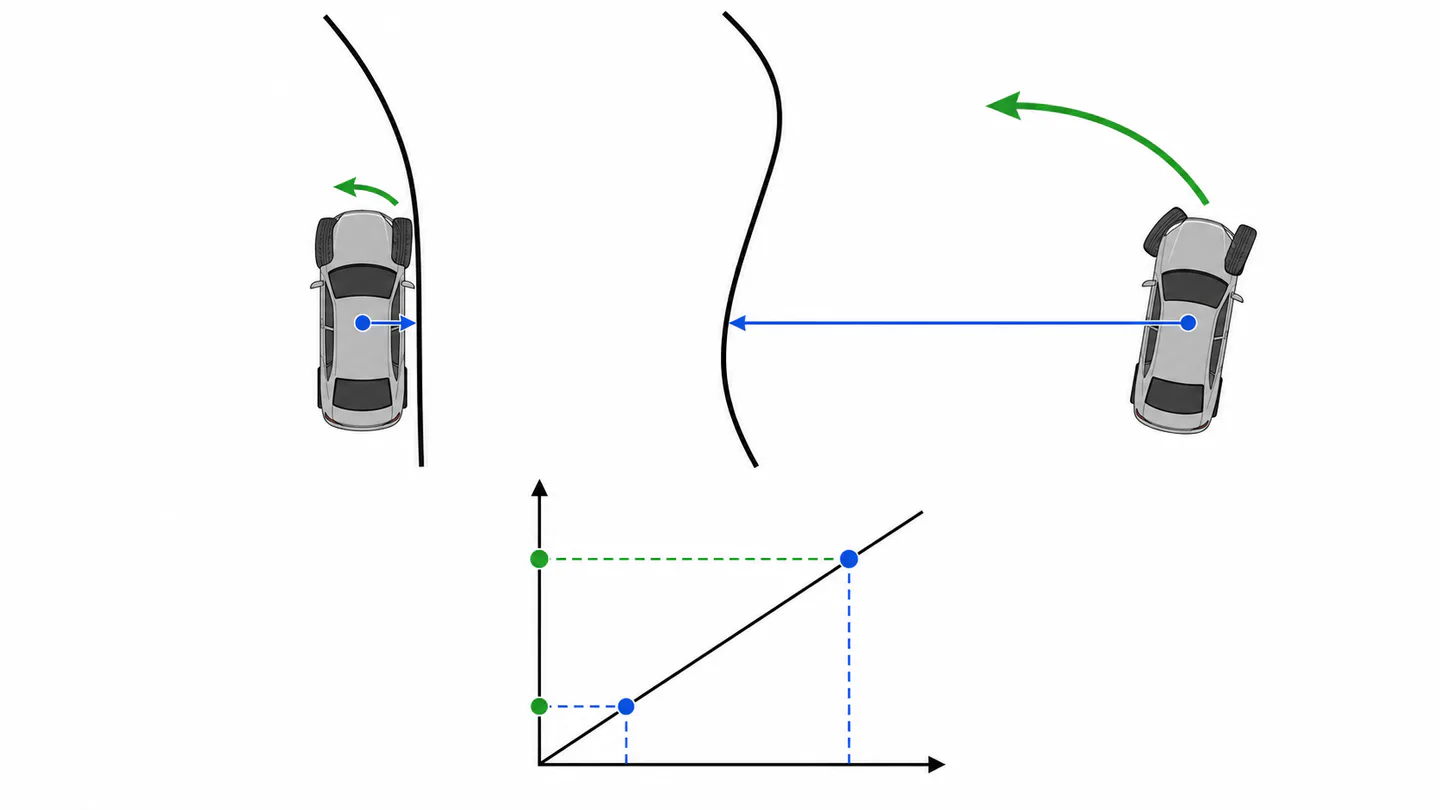
P제어 예시
I 제어 (누적 값에 따른 제어)
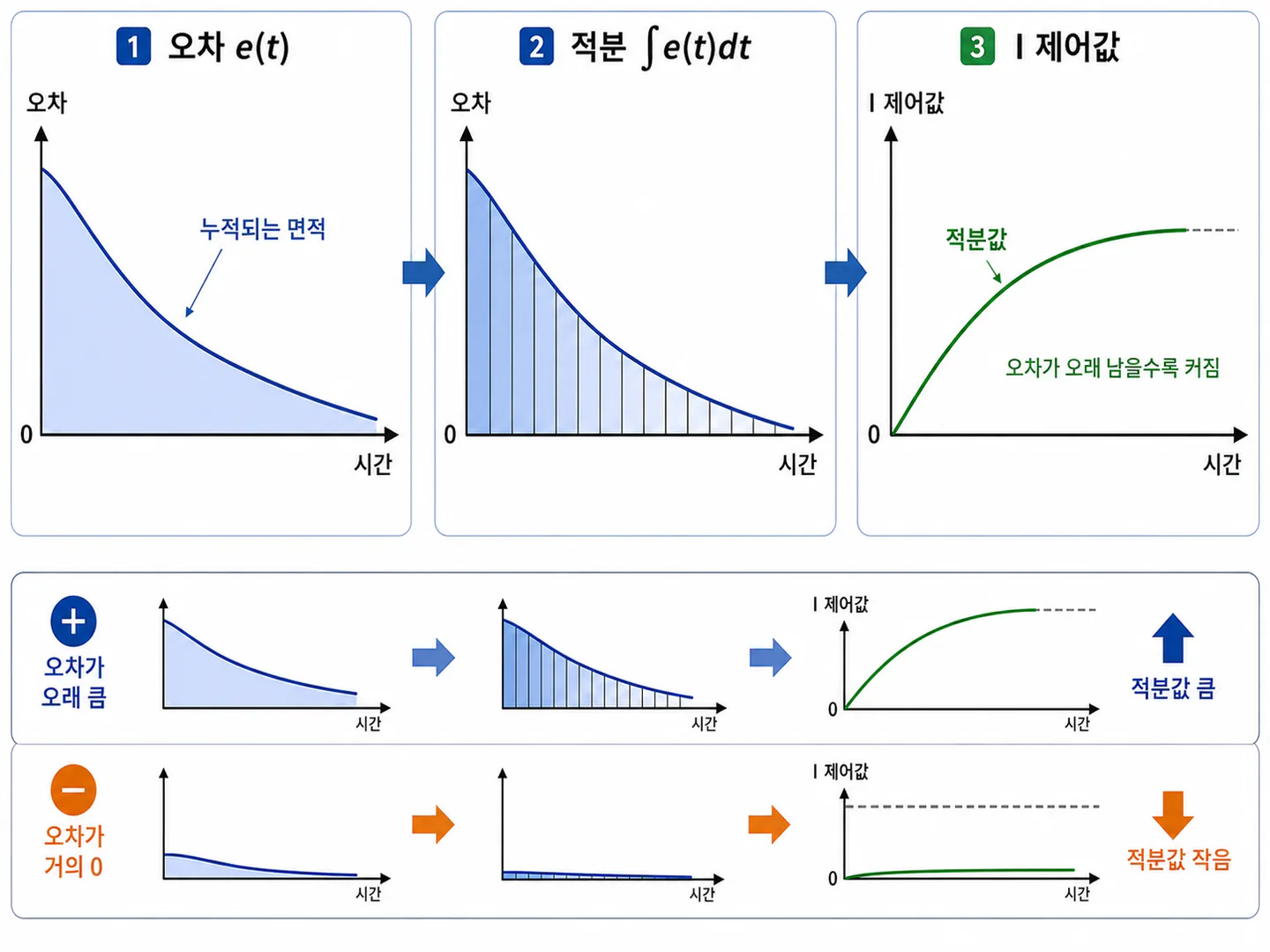
쌓힌 오차를 적분해서 출력 값을 계산하는 방식
작은오차가 오래동안 지속되면 점점 제어값이 누적되어 커집니다, 목표값에 정확하게 일치시키기 위해 사용되어집니다.
P제어에서 생기는 오차를 보정하기위해 주로 사용됩니다.
I 제어의 문제
목표값에 도달하면 쌓인 적분값이 한번에 없어지면서 진동이 생길 수 있습니다. Ki, 계수가 커지면 커질 수록 해당 진동현상이 심해집니다.
액추에이터가 포화된 동안에도 적분값이 계속 쌓여, 풀릴 때 큰 오버슈트를 만드는 현상이 있습니다.
이러한 문제는 anti-windup 방식을 통해 막습니다.
D 제어 (순간변화율에 따른 제어)
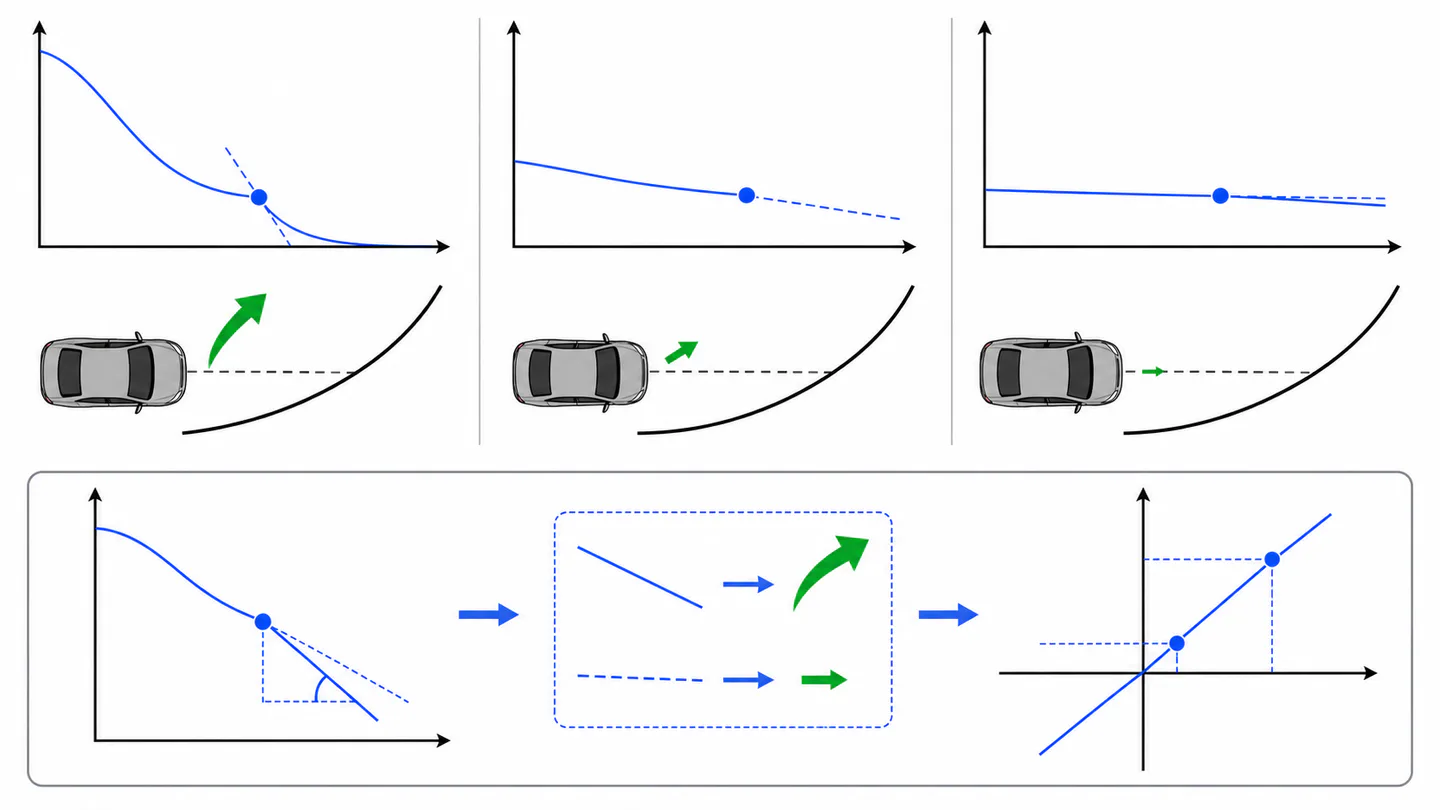
오차가 얼마나 빨리 변하는지 보고 미리 제동을 거는 방식으로, 오버슈트를 억제하고 진동을 줄여 시스템을 안정화할 수 있습니다.
D 제어의 문제
미분은 노이즈의 고주파 성분을 증폭해서 확인하는데, 이는 측정값이 조금만 떨려도 D 항이 출력을 펄럭이게 만드는 문제가 있습니다.
이를 해결하기 위해 아래와 같은 방식들을 사용합니다.
- 오차가 아닌 측정값(PV)에 미분 → setpoint 급변 시 derivative kick 방지
- 미분에 저역통과 필터(filtered derivative).
Control 2 - Principles of Standard PID Feedback Control
Easily understand the core principles of PID control.
What is PID control?
PID is the most widely used feedback controller, which generates a control input based on the error e(t) between the setpoint and the actual value.
P Control (Proportional Control)
A method that calculates the output value in proportion to the error relative to the setpoint
Problems with P Control
Increasing Kp speeds up the response and reduces steady-state error. However, if Kp is set too high, oscillations occur, eventually leading to instability.
If the plant has no integrator action (Type-0), it will seek equilibrium at a non-zero error value to withstand disturbances such as gravity and friction.
In other words, it can be seen as “almost” reaching the setpoint but failing to quite get there. A heater serves as an example. A heater produces a constant output when a constant input is applied.If the plant itself has an integrator (Type-1), the step input offset becomes zero with P control alone.
An example of this is a motor, where the angle continues to accumulate and increase when voltage is applied.Example of P Control
I Control (Control Based on Cumulative Value)
A method that calculates the output value by integrating the accumulated error
If a small error persists for a long time, the control value gradually accumulates and increases; this is used to ensure precise alignment with the target value.
It is primarily used to correct errors arising from P control.
Problems with I Control
When the target value is reached, the accumulated integral value is released all at once, which can cause oscillations. The larger the Ki coefficient, the more severe this oscillation becomes.
There is a phenomenon where the integral value continues to accumulate even while the actuator is saturated, causing significant overshoot when it is released.
This problem is prevented using an anti-windup method.
D Control (Control Based on Instantaneous Rate of Change)
This method involves applying braking in advance based on how quickly the error is changing, which suppresses overshoot, reduces oscillations, and stabilizes the system.
Problems with D Control
The derivative term amplifies the high-frequency components of noise; however, this causes the D term to make the output fluctuate even if the measured value (PV) fluctuates slightly.
To solve this, the following methods are used:
- Apply the derivative to the measured value (PV) rather than the error → Prevent derivative kick during rapid setpoint changes - Apply a low-pass filter (filtered derivative) to the derivative.