하드웨어
모터의 종류와 원리 3 - QDD모터 - 이론
QDD 모터: 로봇 반응성과 제어 성능을 혁신하는 기술
권민재
QDD 모터란
기본적으로 모터들은 고속/저토크 특성을 가집니다.
따라서토크를 증가시키기 위해 감속기를 추가는데, 작은힘으로 빠르게 돌면 감속기가 이에 대응하여 속도를 낮추고, 기어구조에 의해 토크가 증가하는 방식입니다.
QDD모터는 Quasi-Direct Drive, 즉 거의 다이렉트로 움직이는 모터라는 뜻으로, 기어비를 약 6:1정도로 낮춰 (자동차 7~12:1, 로봇 관절 50~150:1)
반응성을 높이고 모터에서 사용되는 전류를 기반으로 하여 토크를 직접 추정할 수 있게 만든 구조입니다.
아래 논문에서는 유니버설 로보틱스 UR5e기준으로기어비를 100:1로 사용한다는 것을 알 수 있습니다.
"Each joint of the robot includes an harmonic drive with a gear ratio equal to i = 100"
왜 기어비를 낮추는가?
AI학습에서 하드웨어에 대한 이슈로 언급되는 반응성에 대한 문제를 개선하는 방식이기 때문입니다.
기어비가 높아질수록 마찰, 백래시, 높은 임피던스 증가를 야기하고 시스템을 비선형적으로 만들며,
이는 제어입력에 대한 응답성이 낮추고 학습시간의 증가, 제어난이도가 증가하는 문제로 나타나기 때문입니다.
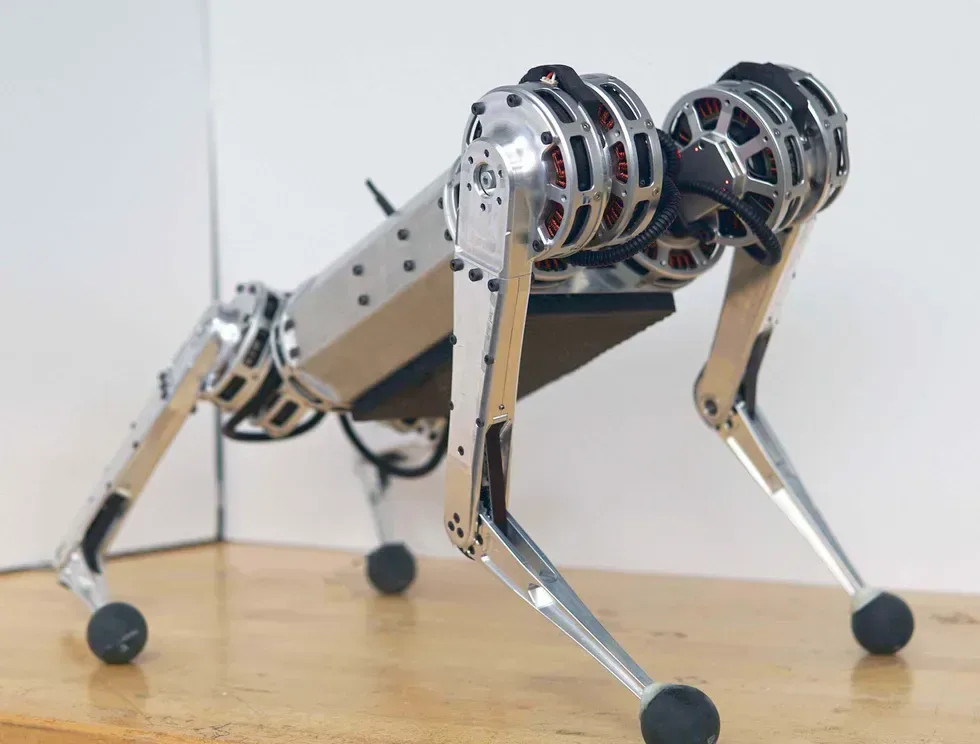
QDD모터는 MIT에서 다리형 로봇(Cheetah)의 동적 제어 성능 향상을 위해 제안된 구동 방식입니다.
QDD 모터의 특징과 장점
낮은 임피던스 & 역구동성 확보
감속비가 낮기때문에 모터에 외력이 들어왔을 때, 관절이 감속기에 저항을 받지않아 모터가 쉽게 역으로 회전 할 수 있습니다.
이로 인해 외력, 충격이 가해졌을 때 자연스럽게 밀리고, 환경과 상호작용하기에 좋습니다.토크 추정
기어비가 낮아 거의 직결방식으로 구성되어 있기 때문에 기구적인 유격으로 인해 발생하는 "백래시" 현상이 적어
전류기반으로 토크를 기존 모터 대비 비교적 정확하게 예측할 수 있습니다.빠른응답성
감속기의 영향을 적게 받아 관성영향에서 기존 모터대비 자유롭고, 응답성이 빠릅니다.
이를 통해 제어신호에 보다 빠르게 대응할 수 있습니다.크기
감속기의 크기가 줄어들어 모터의 크기가 작아집니다.
QDD 모터의 단점
설계 난이도증가
BLDC 모터와 달리 기어비가 작기때문에 그만큼 충분한 힘을 내기위해서 권선, 자석, 용량등의 성능, 밀도의 증가 필연되고 설계 난이도가 증가합니다.발열관리
감속기의 크기가 줄어들지만, 각 부품간의 밀도가 높아지기 때문에 이에따른 방열대책이 필요합니다.비용증가
설계 난이도 증가, 발열관리, 더 많은 코일이 소요되어 비용이 증가합니다.토크의 한계
감속비가 낮아 동일 조건에서의 기타 모터 대비 토크의 절대값에 한계가 존재합니다.
QDD 모터의 적용 사례
MIT Cheetah
Unitree, Go1, 2
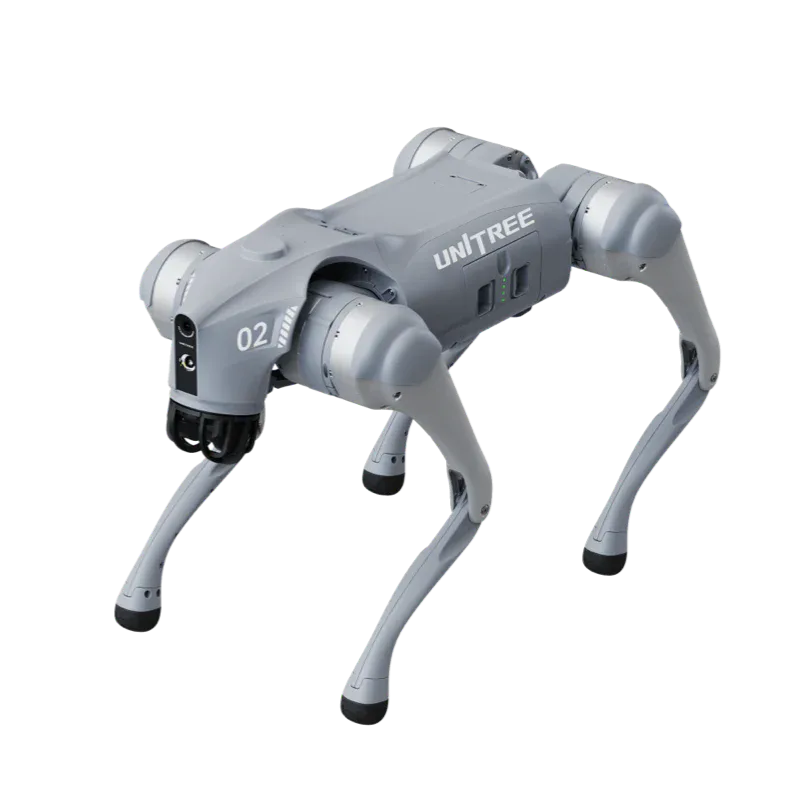
Unitree-Go2
Types and Principles of Motors - QDD Motors
In progress.
What is a QDD motor?
Generally, motors have high-speed, low-torque characteristics.
Therefore, a reduction gear is added to increase torque. When the motor rotates quickly with low force, the reduction gear lowers the speed accordingly, and the gear structure increases the torque.
A QDD motor stands for Quasi-Direct Drive, meaning it operates almost directly. It features a gear ratio of approximately 6:1 (compared to 7–12:1 in automobiles and 50–150:1 in robotic joints) to enhance
responsiveness, and its design allows torque to be estimated directly based on the current drawn by the motor.
The paper below indicates that a gear ratio of 100:1 is used for the Universal Robotics UR5e.
"Each joint of the robot includes a harmonic drive with a gear ratio equal to i = 100"
Why reduce the gear ratio?
This is because it is a method to improve responsiveness, an issue often cited regarding hardware in AI training. As the
gear ratio increases, it causes friction, backlash, and higher impedance, making the system nonlinear.
This results in reduced responsiveness to control inputs, longer training times, and increased control difficulty.
The QDD motor is a drive system proposed by MIT to improve the dynamic control performance of legged robots (Cheetah).
Features and Advantages of QDD Motors
Low Impedance & Reverse Drive Capability Due to
the low reduction ratio, when an external force is applied to the motor, the joint does not encounter resistance from the reducer, allowing the motor to rotate in reverse easily.
As a result, the robot naturally moves backward when subjected to external forces or impacts, making it well-suited for interacting with its environment.Torque Predictability
Since the gear ratio is low and the system is configured almost as a direct drive, there is minimal "backlash" caused by mechanical play, allowing torque
to be predicted relatively accurately based on current compared to conventional motors.Fast Response: Since it
is less affected by the reducer, it is free from the inertial effects typical of conventional motors and offers faster response times.
This allows for quicker response to control signals.Size: The
size of the reduction gear is reduced, resulting in a smaller motor.
Disadvantages of QDD Motors
Increased Design
Complexity: Unlike BLDC motors, the gear ratio is small; therefore, to generate sufficient force, an increase in the performance and density of components such as windings, magnets, and capacitors is inevitable, leading to increased design complexity.Heat Management:
Although the size of the reduction gear is reduced, the density of components increases, necessitating appropriate heat dissipation measures.Increased Costs: Costs rise
due to increased design complexity, heat management requirements, and the need for more coils.Torque Limitations:
Due to the low reduction ratio, there is a limit to the absolute torque value compared to other motors under the same conditions.
QDD Motor Application Examples
MIT Cheetah
Unitree, Go1, 2
Unitree-Go2